The issue of menstrual health is often overlooked, yet it remains a critical barrier to education and economic stability for women worldwide. At the forefront of this global movement is Days for Girls, a leading organization dedicated to tackling these essential needs. Joining us for an in-depth interview is Diana Nelson, the organization’s Global Advocacy Director, whose work is instrumental in driving the conversation on period poverty forward. Days for Girls boasts a significant global presence, with extensive and impactful work empowering women and girls in Uganda, Kenya, and Nepal and a strong presence in South Africa and Ghana.

Understanding Period Poverty: A Holistic Challenge
Period poverty is a global issue that extends far beyond low and middle income countries, impacting even high-income countries like the U.S. where one in four girls struggles to afford necessary menstrual supplies. This widespread lack of access to products, sanitation facilities, and basic education has profound consequences, leading to missed school days, economic hardship, and significant health risks for people who menstruate across all demographics.
Addressing this complex issue requires a multi-faceted approach. The core mission of Days for Girls is to tackle menstrual health needs through three essential pillars: advocacy, comprehensive education, and equitable access to products. Their work acknowledges that distributing supplies is just the beginning of the solution.
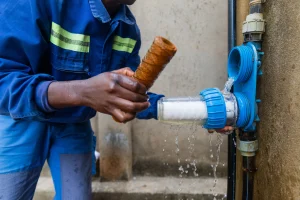
The entire field has evolved beyond focusing solely on product access to embrace a broader, holistic view of menstrual health and hygiene (MHH). This expanded focus recognizes that true dignity and security require more than just menstrual products; it involves addressing pain management, ensuring adequate water access, and accurate and age appropriate menstrual health education in schools and communities .
As Diana Nelson emphasizes, the goal is comprehensive support: “We’re moving toward a holistic perspective. We can’t just give somebody a product and expect that they have all the dignity and security they need. We need to be addressing pain, water access, and sanitation facilities.” This holistic approach is key to achieving sustainable menstrual equity worldwide.
The Days for Girls Operating Model
Days for Girls employs a powerful dual strategy tailored to local needs and resource availability:
- Volunteer Model (High-Income Countries): Volunteers in countries like the U.S. create the patented reusable menstrual pads and hybrid menstrual health kits. These kits are then distributed within their own communities, targeting critical needs in places like homeless shelters and local schools.
- Development Model (Global South): This model focuses on driving long-lasting, sustainable change through country offices in nations like Uganda, Kenya, and Nepal. The strategy involves working directly with local governments on programming and policy, and it utilizes local social enterprises for both the manufacturing and sales of their products, ensuring economic empowerment alongside health security.

Overcoming Stigma and Barriers
A core element of the Days for Girls model is directly confronting the cultural and social barriers that perpetuate period poverty. This requires engaging the entire community, which is why the organization developed the “Men Who Know” curriculum. This initiative is crucial for addressing stigma by actively educating men and boys to become allies in the movement. This commitment extends to working with male government leaders, teachers, fathers, students, etc. to ensure that menstrual health is prioritized in policy and funding decisions, shifting the narrative from a niche women’s issue to a foundational component of community health and development.
However, deeply rooted cultural stigma presents a major challenge, as menstruation is often viewed as secretive, shameful, or dirty, making open discussion often difficult. This stigma also impacts product choice, where reusable items are frequently perceived as being “only for the poor,” despite their sustainable benefits. Days for Girls firmly advocates for “product choice,” ensuring individuals can select the product—whether reusable sanitary pads, disposable products, or cups—that best suits their cultural context, lifestyle, and resources.
On the political front, the movement faces constant funding barriers. Diana Nelson notes a recent setback: “We lost a lot of funding because of the political choice to associate menstrual health with sexual and reproductive health,” limiting the ability of many organizations to access necessary resources. Finally, the biological reality of girls starting their periods as young as eight years old necessitates a shift in educational strategy. Days for Girls is focused on adapting its curriculum to be simpler and age-appropriate for younger girls, ensuring they receive necessary information early to prevent the significant stress and anxiety that often accompanies a lack of preparedness.
A Call to Action: The Period Positive Workplace & Partnership
Looking toward the future, Days for Girls has a bold 5-to-10-year vision to continue leading the Period Positive Workplace (PPW) movement globally. Launched in May 2023, this initiative has rapidly expanded to include 333 certified businesses across 59 countries and six continents, positively impacting over 372,000 employees. As the leader of the steering committee, Days for Girls collaborates with coalition partners to advance the movement worldwide, with Morgan Stanley serving as one of the first global businesses to achieve PPW certification. By encouraging companies to recognize menstrual health as a core component of employee well-being and gender equity, the initiative urges employers to proactively provide product access and supportive policies within the workplace.
“The Period Positive Workplace is our future vision,” Nelson explains. “We want companies to say, ‘We are going to provide period products, whether it’s our kits or other products, because it’s about employee well-being.'” This isn’t just about dignity; it’s about maximizing productivity and ensuring equal participation for employees with periods everywhere.
To achieve this ambitious goal, Days for Girls urgently needs two primary resources: funding and champions. They seek individuals and organizations—particularly those in the WASH sector or community leaders—who are willing to partner with them to drive local adoption and advocacy.
Conclusion and Future Outlook
Looking ahead to 2026, Days for Girls is prioritizing four key focus areas to cement their leadership in the menstrual health movement: expanding the Period Positive Workplaces initiative, embedding robust menstrual education into Period Positive Schools, integrating MHH into broader maternal well-being programs, and continuing their vital work reaching the last mile through humanitarian efforts.
Crucially, the organization is doubling down on its commitment to demonstrating rigorous, data-backed impact. By clearly proving the transformative power of menstrual health interventions, Days for Girls aims to both advance the entire field and successfully weather the volatile funding challenges that often beset humanitarian and women’s health organizations.
The path to menstrual equity is clear, and it is paved with dignity, education, and access. As Diana Nelson asserts: “Our commitment is to show impact, really rigorous data-backed impact, because that is what is going to drive the field forward.”
To support this global movement, we encourage readers to learn more about the organization’s mission, donate to support their work, or take the crucial step of signing up their own businesses t for the free certification to be a Period Positive Workplace today.