“Day Zero” refers to the projected date that a city’s water supply has gotten to a dangerously low point, necessitating the cutoff of water to most residential taps. The Cape Town water crisis spanned from around 2017 to 2018, though the drought began earlier. Water sources would be cut off from most citizens, leaving them to support themselves through limited municipal resources (collecting water at central points). It was a monumental moment in understanding when cities can get to the point of “Day Zero” and how future cities should handle water scarcity.
Causes Behind Cape Town’s Water Shortage
Water shortages are caused by a number of different factors, not solely reliant on one thing. In Cape Town’s case, it was the combination of changing climates, residential numbers rising and poor political coordination that led them to the path that they were on.
Rainfall
One of the biggest reasons for the water shortage in the Western Cape was due to rainfall. Dams in the area were brought to an “unprecedented low” following three successive years of record-low rain. In 2017, there was the least amount of rainfall in the region since 1933. Droughts are usually fairly regular in climates like these, but the sheer amount of flooding and drought combinations over recent years, made it difficult for the region to keep up. Similar to the East Africa water crisis, there is not a lot of great management for these extreme water situations. Droughts make it difficult to have the amount of water needed to fuel the population, but flooding can be just as damaging, with the washing away of crops and producing too much water for farms to be able to maintain. Shifts in climate patterns have changed rainfall and droughts, making them significantly less predictable. Rising temperatures in the climate affect the way that the water cycle works: more water evaporating in the air from global warming makes it so the process doesn’t work as smoothly.
Population Growth
If the lack of rainfall wasn’t already contributing to the water shortage, the population growth in Cape Town was also growing at the same time. The demand for water went up, as the amount of water went down. Over the span of two and a half decades, the population in Cape Town grew by almost 80%. This dramatic increase in demand, combined with uneven distribution and rising water requirements, made it harder to keep up with the drought.
Politics
Politics and government action was also a big factor in how the water shortage in South Africa continued. There seemed to be a disconnect and a lack of coordinated effort between the government and the Western Cape, which resulted in miscommunications about how to solve and handle this crisis. There was no funding that was approved to drill boreholes to grant more access to water. There were studies that showed potential droughts in the future, but not much action was taken beforehand. The delay in the process came from the fact that at the time, dams were still perceived to be sufficient, so they didn’t feel the need to prepare further, leaving citizens with less and less clean water. There were tensions between local and national government, which evidently caused a slower decision making process. Financial mismanagement was a big reason that led to the crisis getting out of control so quickly.
How Citizens and Leaders Responded
A study was conducted to see how the water crisis in South Africa affected the citizens and people living in the area. Fear was the biggest emotion that was cited with the realization that clean water was dwindling. There was also a lot of frustration that came from the way that the crisis had been handled leading up to the drought. However, this widespread concern also spurred incredible collective action from the public.
Impact on Society and the Economy
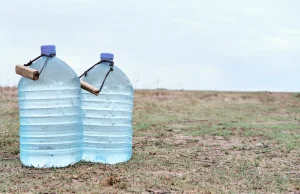
Repercussions from the drought have been brought to light recently in the division between wealthy and lower income areas. Wealthier areas are fortunate enough to produce their own wells for water, along with buying larger quantities of bottled water for clean drinking, whereas less wealthy areas need to find their own solutions. Wealthy or not, individuals and businesses are facing a lot of hardships when it comes to the lack of clean water in the area. At first the city was recommended to use less water, but it was difficult for most citizens to be able to uphold this. Authorities banned filling swimming pools and washing cars, imposing strict daily limits of 50 liters per person. According to National Geographic, “authorities set up water-theft patrols at natural springs to prevent fights over water.”
The Future of Water Planning
So how did the Cape Town water crisis give us lessons for handling these shortages in the future? Cape Town’s official “Day Zero” status ended up being postponed indefinitely after the efforts that were made, post water shortage. Through behavioral change and infrastructure improvements, they were able to decrease the water usage by 30%. Rainfall also came back after the drought for a few years, but they are able to recognize strategies to use for the future. Finding ways to clean water that is undrinkable, such as desalination and water reclamation projects, was one of the biggest reasons that they were able to keep up, in some ways, with the water demand during the scarcity. There has now also been greater value placed on emergency, preventative measures when it comes to making sure that everyone has clean water, not just certain people in certain places. As climate change continues to affect those around the world, it is important that we take lessons from the “Day Zero” in Cape Town.